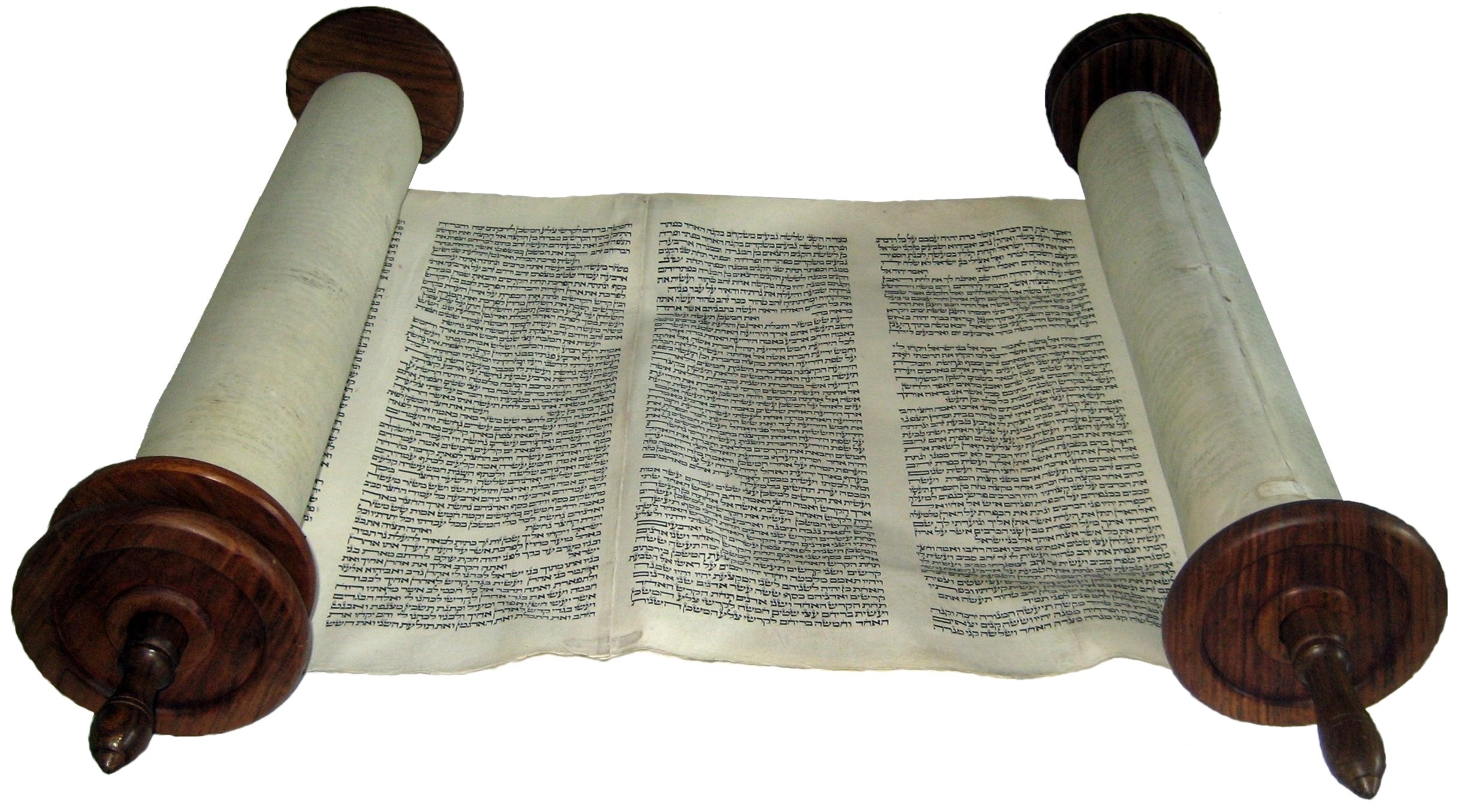
A new prayer-poem for Shavuot. The image: that we stand, always, at the brink of holiness, able to hear the resounding wisdom of Torah, able to received the continued flow of revelation. God’s voice still resounds, if only we can keep faith, if only we choose to listen.
The Brink of Holiness
Every moment
We stand
At the brink of holiness.
Where the Divine summons us
To service and surrender,
To hope and wisdom,
As teachers and guides,
So that we may reach
Toward the heavens
With gentle power.
Every moment
We stand
Where the sound of the shofar
Blends with psalms of praise.
If only we could keep faith.
If only we would choose
To hear the echoes of God’s voice,
Still resounding in all of creation.
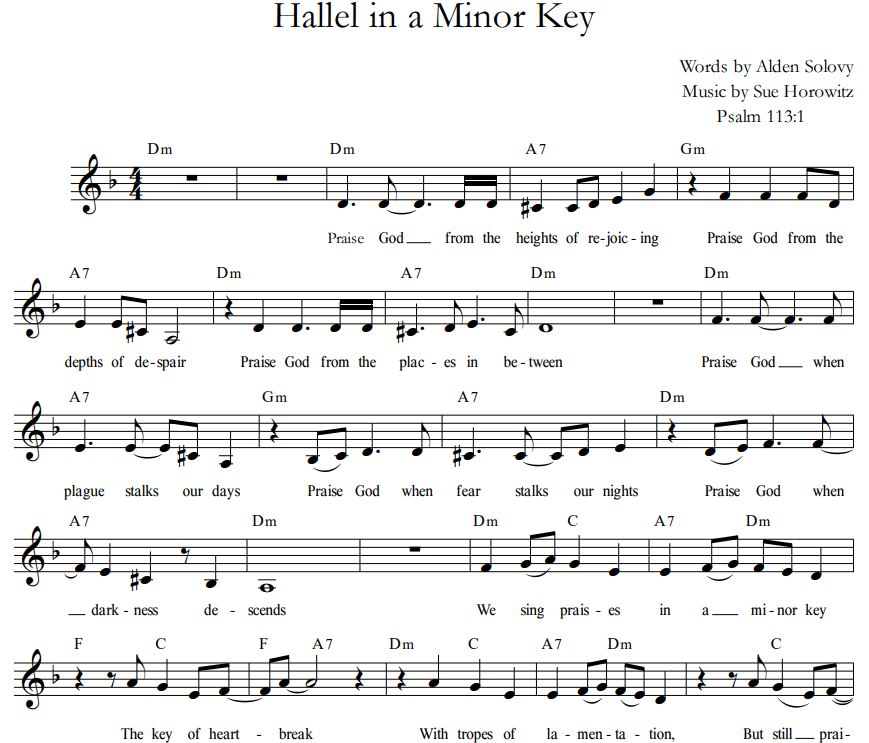
As we approach Rosh Chodesh Kislev, Monday evening and Tuesday, how can we recite Hallel — joyous psalms of praise — in fear for the State of Israel and in anguish for the hostages? How can we recite the traditional psalms of praise in these difficult times? The answer: “Hallel in a Minor Key” with music by Sue Radner Horowitz. This full alternative Hallel with sheet music is available free as a PDF download here as our gift. Click on the triangle in the bar below to hear Sue sing the music. The text follows, beneath the download link. For a deeper discussion of how we created the liturgy, click here for article on the CCAR’s RavBlog. (Updated 12 November 2023.)
Hallel in a Minor Key Praise God from the heights of rejoicing. Praise God from the depths of despair. Praise God from the places between.
Praise God when plague stalks our days. Praise God when fear stalks our nights. Praise God when the darkness descends.
We sing praises in a minor key, The key of heartbreak, With tropes of lamentation, But still praises, For beauty has not been lost And hope has not been defeated, And love still shines, A beacon of tomorrow.
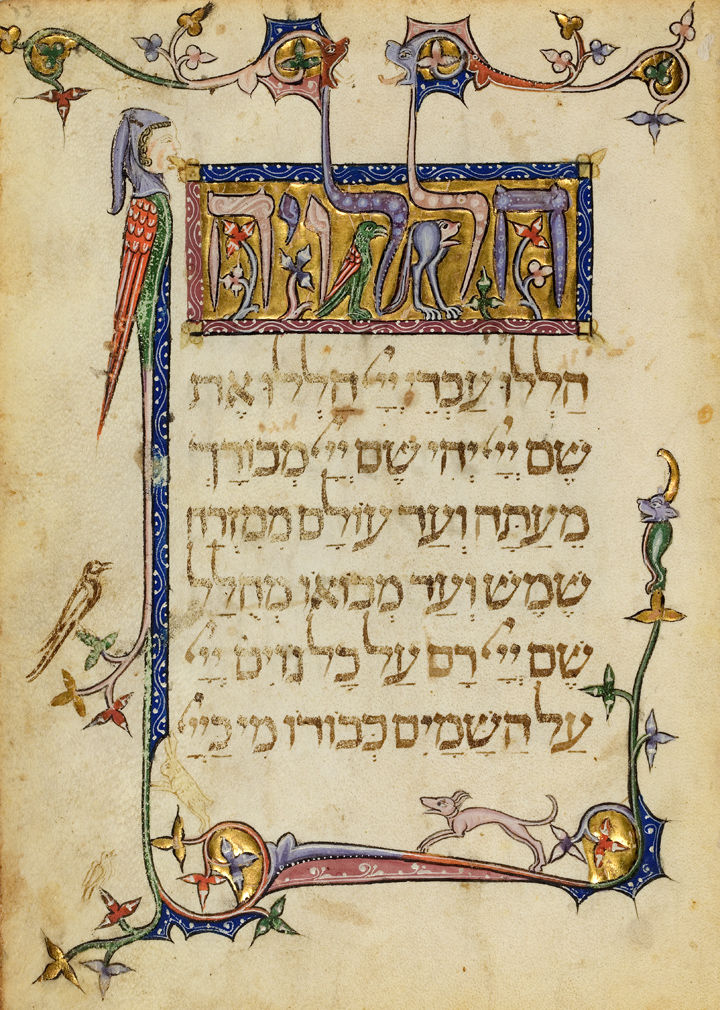
הַ֥לְלוּיָהּ הַ֭לְלוּ עַבְדֵ֣י יהוה הַֽ֝לְל֗וּ אֶת־שֵׁ֥ם יהוה׃ Hal’luyah hal’lu avdei Adonai, hal’lu et shem Adonai. Hallelujah. O servants of Adonai give praise; praise the name of Adonai. (Psalm 113:1)
Praise God from joy and blessing. Praise God from sorrow and pain. Praise God from the places between.
Praise God when God feels distant. Praise God when God feels absent. Praise God when darkness descends.
We sing praises in a minor key, The key of heartbreak, With tropes of lamentation, But still praises, For beauty has not been lost And hope has not been defeated, And love still shines, A beacon of tomorrow.
הַ֥לְלוּיָהּ הַ֭לְלוּ עַבְדֵ֣י יהוה הַֽ֝לְל֗וּ אֶת־שֵׁ֥ם יהוה׃ Hal’luyah hal’lu avdei Adonai, hal’lu et shem Adonai. Hallelujah. O servants of Adonai give praise; praise the name of Adonai. (Psalm 113:1)
Postscript: It was a thrill to work with Sue on this project. Check out her music here. Thanks to my publisher, CCAR Press, for creating the PDF and debuting it on RavBlog, as well as the many individuals who were part of this project. Portions of “Hallel in a Minor Key” were first presented during a Ritualwell online event, “Refuah Shleimah: A Healing Ritual Marking a Year of Pandemic,” and portions were shared in a breakout session at the 2021 Annual CCAR Convention held online. Thanks to both CCAR Press and Ritualwell for sharing the full liturgy. Individual thank yous are shown on the PDF.
New here? Subscribe here to get my newest prayers by email. Share the prayer! Email this to a friend.
This Hallel is for singing praises in times of struggle or sorrow. “Hallel in a Minor Key” is the name of both the liturgy and the opening song, music by Sue Radner Horowitz. The liturgy — a full alternative Hallel, including Hebrew from each of the Hallel Psalms — is available as a PDF download here, including the sheet music. Listen to the song by clicking on the triangle in the bar below. Follow along with the words, beneath the download link. For a deeper discussion of the development of this liturgy, click here to read an article on the CCAR’s RavBlog.
Hallel in a Minor Key Praise God from the heights of rejoicing. Praise God from the depths of despair. Praise God from the places between.
Praise God when plague stalks our days. Praise God when fear stalks our nights. Praise God when the darkness descends.
We sing praises in a minor key, The key of heartbreak, With tropes of lamentation, But still praises, For beauty has not been lost And hope has not been defeated, And love still shines, A beacon of tomorrow.
הַ֥לְלוּיָהּ הַ֭לְלוּ עַבְדֵ֣י יהוה הַֽ֝לְל֗וּ אֶת־שֵׁ֥ם יהוה׃ Hal’luyah hal’lu avdei Adonai, hal’lu et shem Adonai. Hallelujah. O servants of Adonai give praise; praise the name of Adonai. (Psalm 113:1)
Praise God from joy and blessing. Praise God from sorrow and pain. Praise God from the places between.
Praise God when God feels distant. Praise God when God feels absent. Praise God when darkness descends.
We sing praises in a minor key, The key of heartbreak, With tropes of lamentation, But still praises, For beauty has not been lost And hope has not been defeated, And love still shines, A beacon of tomorrow.
הַ֥לְלוּיָהּ הַ֭לְלוּ עַבְדֵ֣י יהוה הַֽ֝לְל֗וּ אֶת־שֵׁ֥ם יהוה׃ Hal’luyah hal’lu avdei Adonai, hal’lu et shem Adonai. Hallelujah. O servants of Adonai give praise; praise the name of Adonai. (Psalm 113:1)
Postscript: It was a thrill to work with Sue on this project. Check out her music here. Thanks to my publisher, CCAR Press, for creating the PDF and debuting it on RavBlog, as well as the many individuals who were part of this project. Portions of “Hallel in a Minor Key” were first presented during a Ritualwell online event, “Refuah Shleimah: A Healing Ritual Marking a Year of Pandemic,” and portions were shared in a breakout session at the 2021 Annual CCAR Convention held online. Thanks to both CCAR Press and Ritualwell for sharing the full liturgy. Individual thank yous are shown on the PDF.
New here? Subscribe here to get my newest prayers by email. Share the prayer! Email this to a friend.
A hallelujah song, with two acrostic paragraphs each spelling the word ‘praise.’ It’s also a salute to the psalms of praise in Jewish liturgy known as Hallel, or praises. The translation of Hallelujah as ‘Celebrate G-d’ comes from Michael Haruni’s Nehalel Siddur. This appears in my new book This Precious Life: Encountering the Divine with Poetry and Prayerfrom CCAR Press. It’s appropriate for Passover, Chanukah, Rosh Chodesh, the Festivals, anytime Hallel is said or you feel moved to Praise G-d!
Praise, Praise
Hallelujah,
Celebrate G-d!
Praise with song,
Rejoice with dance,
Attest with word,
Inspire with deed,
Shout with joy,
Exclaim with awe.
Proclaim G-d’s majesty,
Recall G-d’s works,
Adore G-d’s wonders,
In hymns of love,
Sanctifying G-d’s blessings,
Eternal.
A Shavuot prayer-poem by my kehilla friend Yoni Hammer-Kossoy. His poetry recently appeared or is forthcoming in Forage Poetry, Dime Show Review, the Sunlight Press and the American Journal of Poetry. Yoni is a featured contributor to Songs of Eretz Poetry. Born and raised in the US, he’s lived in Israel with his family for the last 20 years.
Standing at Sinai
We are standing at Sinai and the Torah is given in a heartbeat,
standing and the Torah is still being given
unfolding across time and generations.
We are standing and the others are in shadow,
those who came before and those who will someday come after,
but we feel them as a tree’s deepest roots
seek hidden pools of water,
as a tree feels in every bud the flower and fruit that must follow.
We feel them standing with us in every echo of their names
feel them say amen to what is, has been, and will be.
We feel them standing in every silent question and answer
posed and offered in family pictures
just as some future version of you or me
will feel you standing and hear your echo.
We are standing because that is the gift we are given,
and is the gift we have to give. We are standing at Sinai,
standing in the desert cold
and the heavens fill with sun like a breath overflowing and true,
the kind of breath you take to sing or shout or run for joy
because you can. We are standing in the lush summer heat,
nothing more or less than a regular morning
when a crow calls light, light, light
and the world keeps spinning.
We are standing, we are standing.
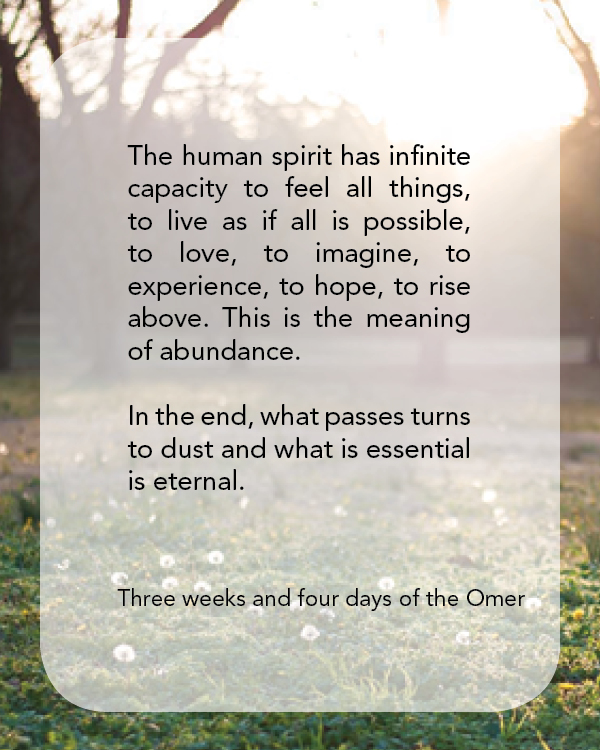
Rabbi Karyn Kedar is a friend who has developed a set of Omer counting tools, both from my publisher, CCAR Press, the book “Omer: A Counting” and a set of lovely inspirational cards with photos by Chime Costello. Here are some of my favorites:
“To know when to reach and when to yield takes years of practice, years of prayer. To know when to be still takes even longer.” — One week and three days of the Omer (my birthday)
“We are summoned to live a better and lovelier life; calmer, quieter, more aware. And even when it is hard and we can feel the exertion of the beating of our heart, we must yield as much kindness as humanly possible.” — Two weeks and three days of the Omer
“When you speak of yourself, use words that are gentle, passionate. Speak of love, of courage, of perseverance, of strength of character, of fortitude. And then become the words you speak.” — Four weeks and four days of the Omer
“And know, of all the words I have found, kindness is the most powerful. It can transform the world. At the end of my days, the only thing I will regret in my life are times when I was unkind.” — Seven weeks of the Omer
This is half prayer prayer, half Torah drash written as spoken word poetry. In Tanach, ‘hineni’ — ‘here I am’ — is a response to a direct call from G-d. The drash is the more obvious: ‘hineni’ is the spiritual practice of being ready to hear G-d’s voice and being prepared to answer. The prayer is the undercurrent: a desired to hear G-d’s call. I’ve also written a more traditional version of this piece. To listen, click on the triangle in the bar below. The text follows.
Avraham, Waiting (Spoken Word Version)
The first ‘Hineni’
Was silent.
It was not a declaration.
Not an announcement.
Not a summons to G-d.
No “Yo G-d, look at me.”
No “Hey G-d, see me.”
No “Check me out, G-d,
Here I Am.”
No.
The first hineni was silent.
It happened before the word was spoken.
Heineni is opening heart.
Heineni is clearing mind.
Heineni is simple readiness.
Wait. Breathe. Surrender.
Hineni.
Heineni is the act of preparing
For G-d to call your name.
Wait. Breathe. Surrender.
Hineni.
And when you hear the call, declare:
“Amen to my prayer.”
“Hallelujah. G-d has called my name.”
“Sheheciayanu v’kiyimanu vihigiyanu lazman hazeh,”
For this moment is unlike any other in the history of the world,
G-d has summoned me.”
Hineni.
Yes, G-d, here I am.
I’ve been waiting.
I’ve been hoping.
I’ve been dreaming.
When Avraham Aveienu said
‘Heineini’ with his lips,
He’d already said it with his heart,
He’d already said it with his soul,
He’d already said it with his might.
Postscript: I read this piece recently at a spoken word Tikkun Leil Shavuot in Jerusalem: “Shavuot Meets Sermon Slam,” a slammin’ tikkun for the sake of Torah. The audio is from one of my rehearsals. My more traditional pieces for Shavuot can be found by clicking here.
Please consider making a contribution to support this site and my writing. For usage guidelines and reprint permissions, see “Share the Prayer!” For notices of new prayers, please subscribe. You can also connect on Facebook and Twitter.
This is a meditation on counting. Counting as a spiritual practice is a reminder to stay present in the current moment, the task at hand and that we are on a journey. Beginning the second night of Passover we count the days until Shavuot. By Counting the Omer we remember the journey from the depths of slavery to the heights of G-d’s Holy Presence. This piece appears in my bookThis Grateful Heart: Psalms and Prayers for a New Day from CCAR Press.
The Season of Counting
This is the season of counting:
Of counting days and nights,
Of counting the space between slavery of the body
And freedom of the soul.
This is a season of seeing:
Of seeing earth and sky,
Of seeing renewal in the land
And renewal in our hearts.
This is a season of journey:
Of inner journeys and outer journeys
Taking us places that need us,
Places that we need.
This is the season of counting,
The season of joyous anticipation,
Of wondrous waiting,
In devotion and awe,
For our most precious gift,
The gift that binds our hearts to each other across the millennia,
The gift that binds our souls to G-d’s Holy Word.
The Torah is waiting for you. Not just to study it. Not just to know it. To live it. This is the latest in a series of prayers that invoke a prophetic voice, prayers that call on us to serve the Source of All Being, including: “Let Truth,” “Let Joy,” “Let Holiness” and “Let Love.” Each one ends with a call to action. To listen along, click on the triangle in the bar below (website only). The text follows.
Let Torah
Let Torah hold your moments
Carry your days,
Lift your years.
Let Torah fill your hands,
Nourish your breath,
Refresh your heart.
Let Torah sustain your words,
Enliven your deeds
Lead you home.
For Torah is in each life and each generation,
In the yearning for G-d and in G-d’s yearning for us,
The flow of secrets from Sinai,
Divine guidance and grace,
Calling out to you dear sisters and brothers:
‘Awake you slumberers!
Awake you who wander empty and lonely without wonder and awe.
Have you forgotten this precious gift?
Have you forsaken your past and your future?
Have you traded your birthright for empty promises?’
This, then, is G-d’s command:
Let Torah hold you,
Fill you,
Sustain you.
Let Torah guide you into radiance and mystery.
Study and learn,
Question and seek,
Hear and grow,
Lifting your life in sacred service.
Let Torah be your breath and your heartbeat.
If you like this prayer, post a link to your Facebook page, your blog or as part of a tweet. And don’t forget to click “like” on this page. Thanks. Please subscribe. For reprint permissions, see “Share the Prayer!”
This story celebrates the love Torah and the great joy of passing that love from generation to generation. It’s great for Shavuot and Simchat Torah. To listen along, click on the triangle in the bar below. The text follows.
Obediah
One morning, after his father went to t’fillah, Obediah the sofer’s son snuck into Papa’s workshop to write his own Torah. The workshop was so tidy, the surface of Papa’s desk clean and ready. Obediah took a sheet of parchment from a large wooden drawer. He took a jar of ink and a quill off the shelf and climbed into Papa’s chair so he could reach the top of the desk. He poured some ink into a small glass just like his father. And as he dipped the quill into the ink a shiver of joy went through him. Obediah would write his own Torah! The Torah of his father and his father and his father, who received it from the rabbis, who received it from the prophets, who received it from the judges, who received it from Joshua, who received it from Moses himself, who stood in G-d’s Holy Presence at Mount Sinai. And for a moment Obediah was there, he was there at Sinai with Moshe and Aaron and Miriam. Obediah saw the pillar of fire and the pillar of cloud. He heard the blast of G-d’s shofar and the deafening silence that followed. He watched as G-d held the holy mountain over the people’s heads. And Obediah the sofer’s son said to no one in particular, “Na’aseh v’neeshma. I will do, and I will listen.”
So Obediah began to write. Bresheit. In the beginning. Barah. Created. Elohim. G-d. “Yes!” Obediah thought. What could be more true and perfect and full of love then G-d in the beginning creating us in order of give us the Torah? In order to give me the Torah?
Just then, Papa walked into the study. Obediah looked up at Papa and looked back at his work. Drips of ink on the desk. Smudges on the back of the parchment. And three beautiful words of Torah.
“Papa, I’m writing a Torah.”
Papa picked him up and scolded him and told Obediah never to do this again and that Obediah did a beautiful job and never to do this again and how proud Papa was of Obediah and never to do this again. Papa put Obediah back in the chair, a tear of joy in his eye. “We’ll clean this up together,” Papa said out loud. But in his heart Papa said, “Shecheyanu v’kiy’manu v’higyanu lazman hazeh.”
And G-d looked down at Obediah and Papa and all the work which in creating G-d had made. And G-d said, “Tov Me-od.” It is very good.
Postscript: Click here for a list of all of my short stories. Click here for a list of Shavuot prayers and stories.
Please use these prayers. See “Share the Prayer!” in the right hand column. For notices of new prayers posted here, please subscribe. To read four to six mini-prayers each week, as well as notices of new prayers posted to the site, please join the To Bend Light fan page on Facebook.
“Alden has become one of Reform Judaism’s master poet-liturgists…" - Religion News Service, Dec. 23, 2020
“Mesmerizing, spiritual, provocative, and thoughtful, Alden was everything you would want in a guest scholar and teacher.” – Rabbi Denise L. Eger, Congregation Kol Ami, Los Angeles, and Past President, CCAR
"Alden Solovy has become one of the most revered liturgists of the last decade…" - Jewish Post & Opinion, March 29, 2023
“Alden left everyone feeling inspired.” – Cantor Jeri Robins, Shabbat Chair, NewCAJE6



 A new prayer-poem for Shavuot. The image: that we stand, always, at the brink of holiness, able to hear the resounding wisdom of Torah, able to received the continued flow of revelation. God’s voice still resounds, if only we can keep faith, if only we choose to listen.